
Eating Disorders & Body Image · St. George & Cedar City

Eating disorders are serious, and full recovery is possible.

Struggles with food and body image can be isolating and exhausting, and they're often about far more than eating. Eating disorders are treatable mental health conditions, and with compassionate care, people recover and reclaim their lives.

Compassionate psychiatric care
Co-occurring conditions addressed
Coordinated support
Eating disorder and body image treatment at Better Balance Psychiatry in Utah

You deserve support, and recovery is possible.

If you're struggling with food, eating, or your body, you don't have to face it alone. For free, confidential support, you can contact the National Alliance for Eating Disorders helpline at 1-866-662-1235. To begin psychiatric care with our team, call (435) 879-7411.

Understanding Eating Disorders

What eating disorders are.

Eating disorders, including anorexia, bulimia, binge eating disorder, and other disordered eating, are serious mental health conditions, not choices or phases. They often coexist with anxiety, depression, trauma, or OCD, and they can affect anyone regardless of age, gender, or body size.

Recovery is possible, and it works best with a coordinated, compassionate team. Our psychiatric care focuses on the emotional and mental health side of recovery and on treating co-occurring conditions, working alongside the medical and nutritional support that full recovery often requires.

Do You Recognize This?

Signs worth reaching out about.

If any of this feels familiar, for you or someone you love, support can help.

  • Food, eating, or body image takes up a large share of your thoughts.
  • Eating brings intense anxiety, guilt, or a sense of loss of control.
  • You avoid meals or eating around others.
  • Your mood or self-worth feels tied to your body.
  • Anxiety, depression, or perfectionism show up alongside it.
How We Help

Compassionate, coordinated care.

Our psychiatric care supports the mental health side of recovery within a team approach.

Talk Therapy

Therapy & Counseling

Evidence-based talk therapy to build skills and process what you're carrying.

Explore Therapy →
Foundational

Medication Management

A careful, systematic medication strategy overseen by a board-certified psychiatrist.

Explore Medication Management →
Structured Support

Intensive Outpatient (IOP)

Several-times-weekly support for when weekly sessions aren't enough, without stepping away from daily life.

Explore IOP →
Why Better Balance

Care that treats the whole person.

Physician-led care

Your treatment plan is directed by a board-certified psychiatrist, so your care is grounded in medical training, not a one-size-fits-all protocol.

Voted Best in Southern Utah

The region voted us Best Psychiatrist in 2023, a reflection of the trust patients and families place in our team.

The full spectrum, close to home

Therapy, medication, and advanced treatments under one roof in St. George and Cedar City, plus telehealth across Utah.

Your Care Team

Psychiatric care for eating disorders.

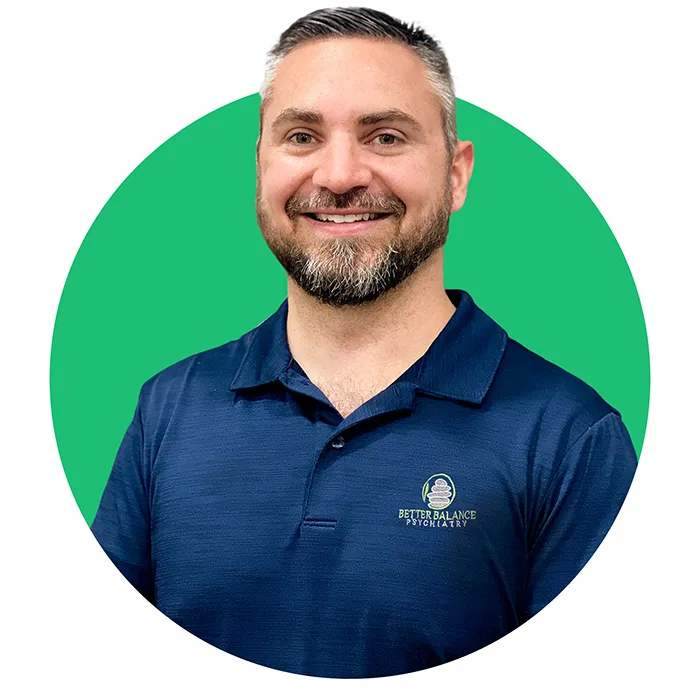
Dr. John Hendleman, M.D., Board-Certified Psychiatrist and founder of Better Balance Psychiatry

Dr. John Hendleman

M.D. · Board-Certified Psychiatrist · Founder

Dr. Hendleman founded Better Balance Psychiatry to bring advanced, evidence-based care to southern Utah. He specializes in treatment-resistant depression, trauma in uniformed service members, and advanced treatments including TMS, Spravato, and IV ketamine.

Learn More

Frequently Asked

Questions people ask.

Are eating disorders treatable?

Yes. Eating disorders are serious but treatable, and full recovery is possible with compassionate, coordinated care over time.

Do eating disorders only affect certain people?

No. They affect people of every age, gender, background, and body size. You don't have to look a certain way to be struggling or to deserve help.

How does psychiatric care fit into eating disorder recovery?

Our psychiatric care addresses the emotional and mental health side of recovery, including co-occurring anxiety, depression, or trauma, and coordinates with the medical and nutritional support that recovery often needs.

Can I reach out on behalf of someone I love?

Yes. Many people first contact us worried about a family member or friend. We're glad to talk through how to help and what care looks like.

Do I need a referral?

No. You can contact us directly for a consultation in St. George, Cedar City, or by telehealth across Utah.

Reaching out is an act of strength.

Contact us for a confidential, compassionate consultation. We'll help you understand your options and coordinate the right support. No referral required.

In-person care in St. George and Cedar City · Telehealth across Utah

Become a Patient
Become a Patient